
1. Startup Software Development: Transforming Concepts into Solutions Ready for the Market

Software is not a luxury for entrepreneurs; it is a need. According to Startup Genome, 90% of firms fail, but those that use customized digital solutions outperform rivals by a significant margin. Take Airbnb, which disrupted hospitality with its booking platform, similarly Uber, which transformed transportation through real-time algorithms. These giants started with one truth: custom software development for startups bridges vision and viability. Off-the-shelf tools rarely fit unique workflows, leaving gaps in scalability and user experience. A Deloitte study discovered that businesses are utilizing specialized software development services for startups grew 3x faster in their first two years. Why? Because software automates growth-critical tasks—lead generation, customer service, and resource allocation—freeing founders to innovate.
2.Custom Software is the only solution to the make-or-break problems
Startups face hurdles: generic tools exacerbate them.
● Resource Drain: Manual processes drain 30% of early-stage productivity (McKinsey).
● Scalability Walls: When the number of users increases, rigid SaaS tools break, such as when there is a market rush.
● Security Gambles: 60% of startups fold after data breaches (IBM), yet most budget software lacks enterprise-grade protection.
● Integration Chaos: Disconnected apps create data silos. Slack’s rapid growth proved that unified communication is unavoidable.
Custom software development for startups rebuilds broken workflows. For example, fintech startup Stripe built proprietary fraud-detection APIs, reducing payment failures by 40%—something no out-of-the-box solution could achieve.
● Resource Drain: Manual processes drain 30% of early-stage productivity (McKinsey).
● Scalability Walls: When the number of users increases, rigid SaaS tools break, such as when there is a market rush.
● Security Gambles: 60% of startups fold after data breaches (IBM), yet most budget software lacks enterprise-grade protection.
● Integration Chaos: Disconnected apps create data silos. Slack’s rapid growth proved that unified communication is unavoidable.
Custom software development for startups rebuilds broken workflows. For example, fintech startup Stripe built proprietary fraud-detection APIs, reducing payment failures by 40%—something no out-of-the-box solution could achieve.
2.1 5 Critical Benefits of Bespoke Software
1. Precision Problem-Solving
Like a master key, custom software fits your exact operational locks. Food delivery startup DoorDash engineered route optimization algorithms, cutting delivery times by 25%, directly boosting customer retention.
2. Scalability Without Suffering Cloud-native architectures let startups like Canva handle 60M monthly users without infrastructure headaches. Elastic resources mean you pay for what you use—critical when 47% of startups fail from cash shortages (CB Insights).
3. Future-Proof Innovation Custom code adapts as you pivot. Before reinventing its core into a photo-sharing phenomenon—flexibility that off-the-shelf software can't match—Instagram was originally Burbn, a check-in app.
4. Competitive Edge: Proprietary tools hide your “secret sauce.” Netflix’s recommendation engine—a custom-built AI—became its billion-dollar moat against competitors.
5. Investor Magnetism: Because they perceive them as lower-risk investments, VCs invest 35% more in firms with scalable tech stacks (PitchBook).
Like a master key, custom software fits your exact operational locks. Food delivery startup DoorDash engineered route optimization algorithms, cutting delivery times by 25%, directly boosting customer retention.
2. Scalability Without Suffering Cloud-native architectures let startups like Canva handle 60M monthly users without infrastructure headaches. Elastic resources mean you pay for what you use—critical when 47% of startups fail from cash shortages (CB Insights).
3. Future-Proof Innovation Custom code adapts as you pivot. Before reinventing its core into a photo-sharing phenomenon—flexibility that off-the-shelf software can't match—Instagram was originally Burbn, a check-in app.
4. Competitive Edge: Proprietary tools hide your “secret sauce.” Netflix’s recommendation engine—a custom-built AI—became its billion-dollar moat against competitors.
5. Investor Magnetism: Because they perceive them as lower-risk investments, VCs invest 35% more in firms with scalable tech stacks (PitchBook).
3 Your Startup’s Software Service Toolkit
Not all software development services for startups are equal. Prioritize these:
● MVP Development: Test ideas cheaply. Before coding started, Dropbox's MVP—a straightforward video demo—validated demand and quickly secured its first 75,000 sign-ups.
● Cloud Integration: AWS/Azure deployments slash server costs by 70% while enabling global access.
● AI & Automation: Chatbots handle 80% of routine support queries (Gartner), letting human teams tackle small errors.
● DevOps & Continuous Deployment: Automate testing and updates. GitHub reports startups using DevOps deploy 200x more frequently with 50% fewer errors.
● MVP Development: Test ideas cheaply. Before coding started, Dropbox's MVP—a straightforward video demo—validated demand and quickly secured its first 75,000 sign-ups.
● Cloud Integration: AWS/Azure deployments slash server costs by 70% while enabling global access.
● AI & Automation: Chatbots handle 80% of routine support queries (Gartner), letting human teams tackle small errors.
● DevOps & Continuous Deployment: Automate testing and updates. GitHub reports startups using DevOps deploy 200x more frequently with 50% fewer errors.
4.Choosing Your Development Partner: The 4 Commandments

Not all software development companies for startups deserve your trust. Vet partners by:
1. Portfolio Depth: Request case studies related to your area of expertise. Health technology? They should know a lot about HIPAA compliance.
2. Transparent Pricing: Avoid firms charging per hour. Fixed-scope projects prevent budget blowouts—like Basecamp’s famed “no surprises” model.
3. Communication Delay: Daily stand-ups via Slack/Teams prevent vision drift. Asana’s post-mortem of failed projects blamed poor client-dev sync in 89% of cases. 4. Post-Launch Lifelines: 60% of software flaws emerge post-launch (IEEE). Partners should offer 3+ months of included support.
1. Portfolio Depth: Request case studies related to your area of expertise. Health technology? They should know a lot about HIPAA compliance.
2. Transparent Pricing: Avoid firms charging per hour. Fixed-scope projects prevent budget blowouts—like Basecamp’s famed “no surprises” model.
3. Communication Delay: Daily stand-ups via Slack/Teams prevent vision drift. Asana’s post-mortem of failed projects blamed poor client-dev sync in 89% of cases. 4. Post-Launch Lifelines: 60% of software flaws emerge post-launch (IEEE). Partners should offer 3+ months of included support.
4.1 Why India Dominates Startup Software Development
A custom software development company in India is a strategically important accelerator that is also economical. Forty percent of Y Combinator businesses (NASSCOM) are powered by Indian development firms due to:
● Cost Efficiency: Senior developers cost 60% less than U.S. counterparts without quality trade-offs.
● 24/7 development cycles: Round-the-Clock Productivity. Your team sleeps; India based developers deploy.
● Deep Tech Prowess: India produces 1.5M STEM grads yearly. Firms like Tata Consultancy Services built NASA’s Mars mission software.
● IP Protection: Strict IT laws make India among Asia’s safest outsourcing hubs.
● Cost Efficiency: Senior developers cost 60% less than U.S. counterparts without quality trade-offs.
● 24/7 development cycles: Round-the-Clock Productivity. Your team sleeps; India based developers deploy.
● Deep Tech Prowess: India produces 1.5M STEM grads yearly. Firms like Tata Consultancy Services built NASA’s Mars mission software.
● IP Protection: Strict IT laws make India among Asia’s safest outsourcing hubs.
5. The Process of Developing Startup Software: From Napkin to IPO
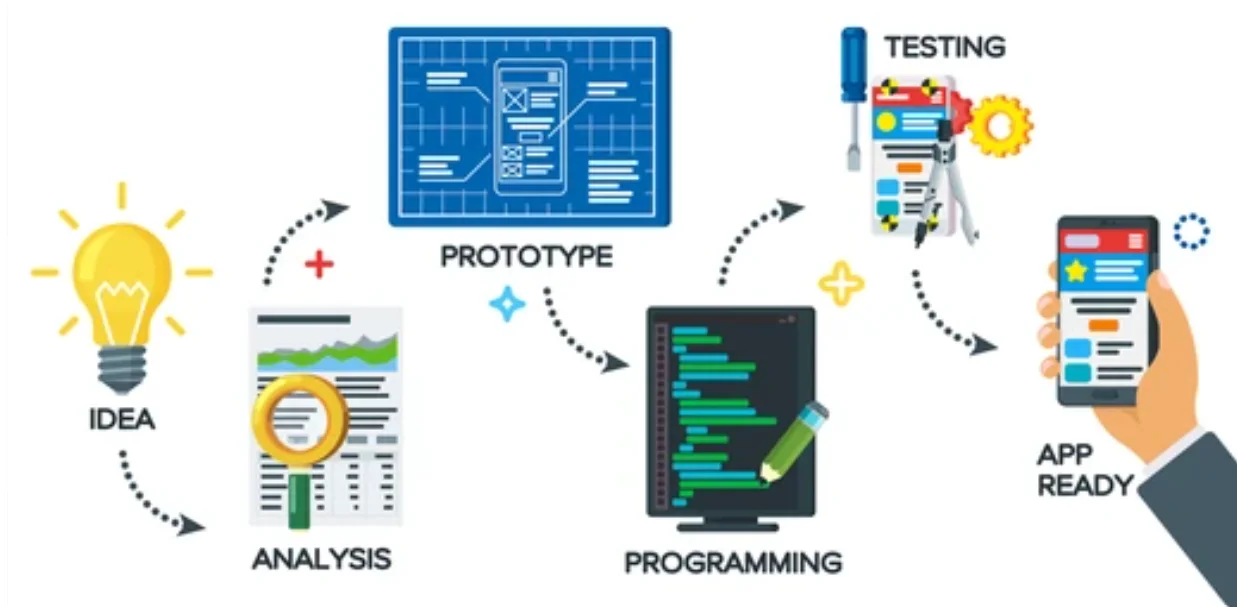
When planning mobile banking app development, understanding cost drivers is crucial for budgeting effectively. The final price tag for building a competitive mobile banking app like Santander can vary dramatically based on these six critical factors. A professional mobile app development company dubai can help navigate these variables to optimize your investment.
5.1 Phase 1: Discovery & Validation
● Conduct user interviews (survey 200+ target customers).
● Build wireframes in Figma for $5K–$10K—cheaper than coding blind.
● Build wireframes in Figma for $5K–$10K—cheaper than coding blind.
5.2 Phase 2: MVP Launch
● Develop only core features (e.g., Uber MVP: ride requests + GPS + payments).
● Expect 3–6 months and $30K–$80K. Use React Native for cross-platform savings.
● Expect 3–6 months and $30K–$80K. Use React Native for cross-platform savings.
5.3 Phase 3: Iterate with Data
● Track user behavior via Mixpanel. Instagram’s “like” button was an MVP add-on after seeing photo engagement.
● A/B test features weekly
● A/B test features weekly
5.4 Phase 4: Scale & Automate
● Migrate to microservices. Spotify’s 1,000+ independent services enable zero-downtime updates.
● Add AI: Stitch Fix’s algorithms now drive 80% of styling choices.
● Add AI: Stitch Fix’s algorithms now drive 80% of styling choices.
6.Startup Rules Will Be Rewritten by Software Trends in 2025
Startup Rules Will Be Rewritten by Software Trends in 2025
● AI Copilots: Otter.ai automates meeting notes, saving 15 hours per employee every month; Jasper.ai creates marketing text.
● Blockchain Trust: Supply chain startups use immutable ledgers to verify ethical sourcing, appealing to 70% of conscious consumers (Deloitte).
● PWAs > Apps: Progressive Web Apps cost 3x less than native apps and work offline—Twitter Lite saw 65% more engagement post-PWA shift.
● Voice/AR Interfaces: Shopify reports that 40% of Gen Z customers use augmented reality try-ons. Custom integrations future-proof UX.
● AI Copilots: Otter.ai automates meeting notes, saving 15 hours per employee every month; Jasper.ai creates marketing text.
● Blockchain Trust: Supply chain startups use immutable ledgers to verify ethical sourcing, appealing to 70% of conscious consumers (Deloitte).
● PWAs > Apps: Progressive Web Apps cost 3x less than native apps and work offline—Twitter Lite saw 65% more engagement post-PWA shift.
● Voice/AR Interfaces: Shopify reports that 40% of Gen Z customers use augmented reality try-ons. Custom integrations future-proof UX.
7.Cost Breakdown
Startup software development expenses vary greatly but often follow these trends:
● MVP: $25K–$100K (3–6 months)
● Full Platform: $120K–$500K+ (8–18 months)
● Enterprise-Grade: $750K+ (24+ months)
Factors skewing budgets:
● Tech Stack: Python/Django saves 30% vs. Ruby on Rails.
● Team Location: Ukrainian developers charge $40–$80/hour; U.S. firms: $150–$250.
● Compliance: HIPAA/GDPR adds 15–20% to dev costs.
● MVP: $25K–$100K (3–6 months)
● Full Platform: $120K–$500K+ (8–18 months)
● Enterprise-Grade: $750K+ (24+ months)
Factors skewing budgets:
● Tech Stack: Python/Django saves 30% vs. Ruby on Rails.
● Team Location: Ukrainian developers charge $40–$80/hour; U.S. firms: $150–$250.
● Compliance: HIPAA/GDPR adds 15–20% to dev costs.
8 Conclusion
For startups, software isn’t an expense—it’s equity. Custom solutions transform fragile ideas into market-defining machines. Airbnb’s $1.3B revenue didn’t spring from a generic booking plugin; it came from obsessive tailoring to host/guest needs. Partner with software development companies for startups that speak your growth language. Whether a custom software development company in chennai or a local agile squad, prioritize partners who engineer for tomorrow’s scale—not just today’s MVP. Your software should intimidate competitors, not imprison you in tech debt. Build once. Dominate forever.
Meet the Author

Co-Founder, Rytsense Technologies
Karthik is the Co-Founder of Rytsense Technologies, where he leads cutting-edge projects at the intersection of Data Science and Generative AI. With nearly a decade of hands-on experience in data-driven innovation, he has helped businesses unlock value from complex data through advanced analytics, machine learning, and AI-powered solutions. Currently, his focus is on building next-generation Generative AI applications that are reshaping the way enterprises operate and scale. When not architecting AI systems, Karthik explores the evolving future of technology, where creativity meets intelligence.